Healthy Back-to-School Lunchbox Ideas Kids Will Actually Eat (2026)
Make-ahead lunchbox ideas that survive the morning rush, hold up at room temperature, and pass the one test that matters — whether the kid actually eats them.
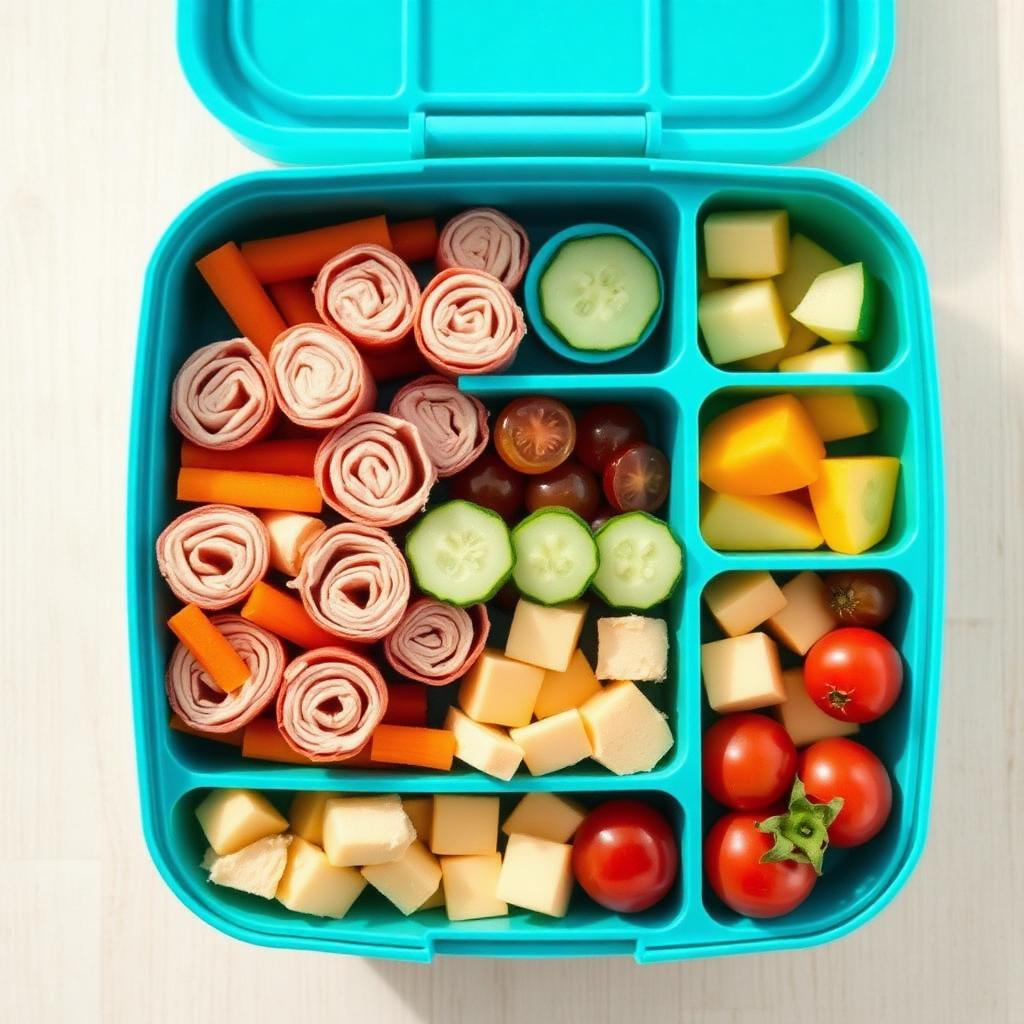
Healthy Back-to-School Lunchbox Ideas Kids Will Actually Eat (2026)
Most kids will eat a school lunch if three things are true at 11 a.m.: it tastes good at room temperature, they recognize it, and the portion doesn't embarrass them in front of friends. Start there and the rest of the nutrition is much easier.
That is the test most lunchbox advice skips. The list-of-101-fancy-ideas roundups set families up to spend an hour rolling sushi only to find the container coming home untouched at 3:30. A lunchbox is a system that works because a kid opens it, eats it, and wants it again tomorrow — built from a short rotation of tried-and-true mains, two or three raw produce sides, and a make-ahead plan that fits a real weeknight.
This guide is for August-return families: the criteria a lunch has to clear, the protein-forward mains kids actually finish, the produce that survives until lunch untouched, and a 30-minute Sunday prep window that survives the Monday rush. Every recipe idea points back to a real Most Wanted book on the kitchen counter.
What a "good" lunchbox actually has to do
Six constraints matter more than any recipe idea:
- Room-temperature safety. Lunchboxes may sit 2–4 hours unrefrigerated. The Centers for Disease Control and Prevention recommends keeping perishable items cold with an ice pack or thermos and discarding anything left in the "danger zone" (40–140 °F / 4–60 °C) beyond roughly 2 hours.
- Texture at 11 a.m. What was crisp at 7 a.m. is often soggy at 11 a.m. Choose foods whose texture holds as they cool: cooked grains, roasted vegetables, dried fruit, nut butters.
- Kid-recognized shapes. Cut sandwiches into recognizable forms; use a cookie cutter if it helps. Shape novelty beats ingredient novelty.
- One hand, no mess. If a lunch requires two hands, a fork, or a napkin-wrapped filling, it usually comes home half-eaten.
- Visible produce. At least one fruit or vegetable that looks like itself. Hidden cauliflower breadsticks do not survive peer scrutiny.
- Under 10 minutes of morning assembly. Most weeknight cooks cannot sustain a 30-minute lunch build at 7:15 a.m., no matter how motivated they were on Sunday.
Almost every "creative" lunchbox idea fails on constraint 6 alone.
The five protein-forward mains kids finish
These build a 12–20 g protein base without resorting to deli meat every day. All five travel at room temperature with an ice pack and taste roughly the same at 11 a.m. as at 7 a.m.
| Main | Approx. protein per serving | Prep ahead | Notes |
|---|---|---|---|
| Turkey & cheese pinwheels (whole-wheat tortilla) | 15 g | Up to 24 h | Roll tight, slice into 1-inch rounds; the pinwheel stays intact. |
| Hard-boiled eggs (2) with flaky salt | 12 g | Up to 4 days | Boil Sunday, store peeled. |
| Hummus & roasted-pepper wrap | 11 g | Up to 24 h | Fiber-forward Mediterranean pattern. |
| Chicken-apple salad with grapes | 18 g | Up to 3 days | Light mayo, sealed container, ice pack. |
| Black-bean & cheese quesadilla wedges | 14 g | Up to 24 h | Serve cold or at room temp; works in bento boxes. |
The Most Wanted Kids Recipes collection has dozens of variations on each — sandwich rolls, mini quiches, pinwheel wraps, skewer-friendly finger foods — and they rehearse the same room-temperature-test principle.
Produce that holds up until lunch
This is where most lunchboxes fail. A sliced strawberry and a thermos can both look great at 7 a.m., then arrive mushy. The table below sorts common produce by how long it stays appetizing at room temperature.
| Produce | Holds at room temperature | Notes |
|---|---|---|
| Apple slices (tossed in lemon juice) | 4–6 h | Acidulated water prevents browning. |
| Carrot sticks / cucumber rounds | 4–6 h | Cut fresh; submerge briefly in cold water for extra snap. |
| Bell-pepper strips | 4–6 h | Color variety helps kids grab them. |
| Whole grapes (halved for younger kids) | 4+ h | Wash and dry well — moisture is the enemy. |
| Strawberries, blueberries | 1–2 h on their own | Pack frozen; they double as the ice pack. |
| Banana | 2–3 h | Browns quickly; a squeeze of lemon helps. |
| Roasted broccoli, roasted peppers | 4+ h | Mediterranean pattern — sturdy at room temperature. |
| Cherry tomatoes | 4+ h | Halved for younger kids (choking hazard whole). |
| Cubed watermelon | 2–3 h | A pool of juice arrives by lunch. |
A simple rule: pick produce that is naturally stable. Frozen berries as the ice pack is both practical and food-safe.
The 30-minute Sunday prep window
A reliable lunchbox week begins Sunday afternoon. Most families can sustain 25–35 minutes of prep and stay lunchbox-ready for the whole week.
| Block | Time | What to do |
|---|---|---|
| 0:00–0:10 | Hard-boil 8 eggs; wash and chop 4 cups of produce (carrots, peppers, cucumbers, grapes); fill a jar with lemon-water for sliced apples. | |
| 0:10–0:20 | Cook one grain batch (rice or quinoa, 2 cups dry yields 6 cups cooked); assemble 4 wraps or pinwheels; portion hummus into 2 oz containers. | |
| 0:20–0:30 | Line up containers; freeze the week's ice packs; write the week's menu on a kitchen Post-it so kids can tell you what is left. |
If 30 minutes is unrealistic, drop the wraps and lean on thermos meals — soup, stew, even pasta — which travel beautifully hot or warm. The Most Wanted Quick Recipes and Most Wanted Casserole Recipes both have thermos-friendly picks.
Common pitfalls (and how to avoid them)
- The soggy sandwich. Spread butter or mayo on both slices, edge to edge. The fat creates a moisture barrier.
- The rejected green. Most kids will not eat a plain raw spinach leaf in a wrap. Fold spinach inside a quesadilla or use it in egg muffins instead.
- The thermos mistake. Preheat the thermos with boiling water for 5 minutes, then add hot food. A cold thermos drops food temperature below the safe hot-hold zone within 20 minutes.
- The all-carb lunchbox. Pair every grain with a protein — egg, cheese, beans, hummus, leftover meat — to keep kids full through afternoon recess and pick-up line.
Pediatric-eating guidance from the Academy of Nutrition and Dietetics generally recommends pairing a protein, a produce item, a whole grain, and a hydration source — but portion sizes and acceptance matter more than the categories themselves.
A sample two-week rotation
Make Monday–Friday automatic by rotating two or three "winning combos":
- Monday — turkey pinwheels, carrots, grapes
- Tuesday — leftover pasta salad (cold), bell-pepper strips, apple slices
- Wednesday — hummus wrap, cucumber rounds, frozen berries (ice pack)
- Thursday — hard-boiled eggs, cheese cubes, cherry tomatoes, whole-grain crackers
- Friday — thermos of chicken-and-rice, roasted broccoli, orange segments
After two weeks, ask the kids what actually got eaten and what came home. Drop the losers, keep the wins. A lunchbox is a feedback loop, not a menu.
What to keep on the kitchen counter
A working lunchbox system does not need many tools. A good thermos, two leakproof bento boxes, a few small containers, and a tested rotation of five or six mains covers most weeks. The books worth keeping within arm's reach are:
- Most Wanted Kids Recipes — the broadest collection for the lunchbox mains.
- Most Wanted Quick Recipes — weeknight prep supporting the lunchbox.
- Most Wanted Casserole Recipes — thermos-friendly hot lunches for cold-weather days.
A lunchbox habit is one of the small kitchen habits that compounds: ten minutes of Sunday prep, a working rotation of five mains, and a kid who actually eats at 11 a.m. — every week, every school year, for the next decade.