The Best Summer Foods to Quiet Inflammation
Some summer foods carry compounds that studies link to lower inflammation — berries, greens, tomatoes, oily fish, nuts, and herbs. Here's the honest, evidence-aware plate.
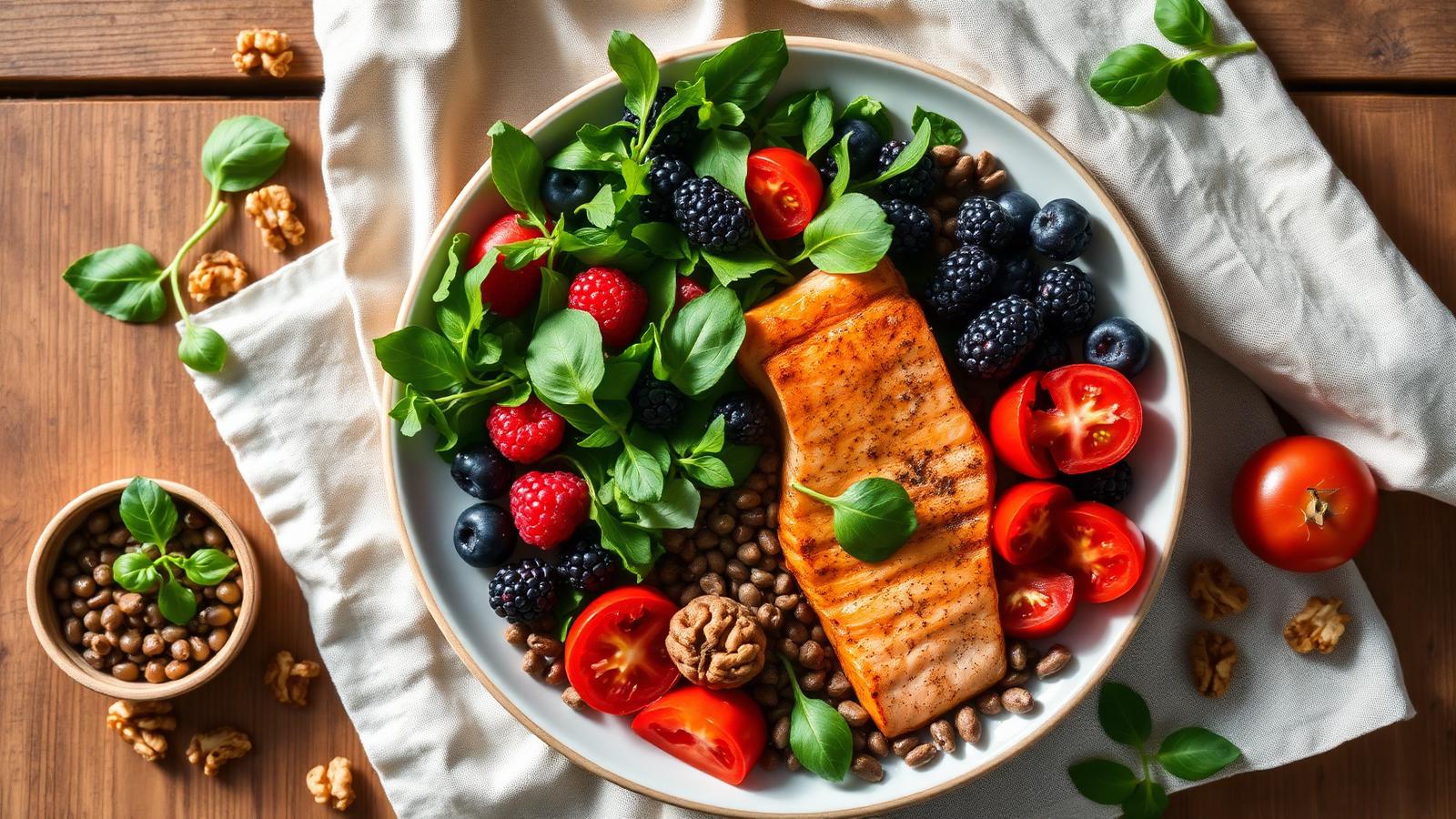
Some summer foods genuinely carry compounds that decades of research link to lower, quieter inflammation — and the best part is that they're already in season right now. Berries, leafy greens, tomatoes, oily fish, nuts, and a handful of herbs all show up in peer-reviewed studies for their anti-inflammatory action. The catch: the evidence is real but it isn't magic, and "anti-inflammatory" isn't a license to eat anything labeled with the word. Here's an honest, evidence-aware plate guide for generally healthy eaters.
Why mid-summer is when this matters most
Heat changes what we want to eat — cold grain bowls, raw salads, fruit for breakfast, fish cooked in eight minutes flat. Those choices happen to align with the patterns researchers keep finding in cohorts that score low on chronic inflammation markers. A summer plate built around plants, oily fish, nuts, and herbs is both easier to cook in a hot kitchen and closer to what the data says. The two facts are not unrelated.
The 6 categories (and what the evidence actually says)
The honest summary of two decades of nutrition research is this: no single food "fights inflammation" on its own. Patterns matter. But within those patterns, certain foods have specific compounds that show measurable effects in lab studies and cohort analyses. None of this is medical advice — it's a plate guide for generally healthy eaters.
1. Berries — anthocyanins, the deep color
Blueberries, blackberries, strawberries, raspberries. The deep pigments are anthocyanins, and they show up in studies linked to lower markers of inflammation like CRP and IL-6. Harvard T.H. Chan's Nutrition Source summarizes the evidence as "consistent" rather than "definitive" — which is the right word for a real-world reader. A cup a day, fresh in summer, frozen in winter. A handful of berries on plain yogurt with a teaspoon of ground flax is one of the cheapest anti-inflammatory breakfasts you can build.
2. Leafy greens — magnesium, folate, carotenoids
Spinach, kale, arugula, chard, romaine. The magic isn't one compound — it's the combination of magnesium (which most adults under-consume), folate, and a wide range of carotenoids. The NIH Office of Dietary Supplements notes that low magnesium status is independently associated with elevated CRP, which is one piece of the inflammation puzzle. A big green salad daily isn't a cure; it's a baseline.
3. Tomatoes — lycopene, in season and at peak
This is the food many of you already have a glut of, so the timing is convenient. Cooked tomatoes concentrate lycopene, the carotenoid that several cohort studies have linked to lower markers of systemic inflammation. Raw tomatoes are good; slow-roasted are better; tomato paste is the densest source. Our Most Wanted Italian Recipes book has a chapter on slow-roasted tomatoes that pairs naturally with a plate of whole grains and a fistful of basil.
4. Oily fish — omega-3 EPA and DHA
Salmon, sardines, mackerel, anchovies. The long-chain omega-3s here are the most studied anti-inflammatory nutrients in human nutrition, with a 2020 review in Nutrients finding consistent effects on inflammatory biomarkers at doses around 250–500 mg combined EPA and DHA per day. Two servings a week is the rough target most guidelines converge on. Wild-caught when you can find it; canned sardines count.
5. Nuts and seeds — small handful, big effect
Walnuts, almonds, flax, chia, pumpkin seeds. Walnuts in particular are the most-studied nut for inflammation; a 30 g daily handful (about a small palm) shows up repeatedly in cohort analyses as a modest but real contributor to lower inflammatory markers. The omega-3 ALA in flax and chia isn't as biologically active as the EPA and DHA from fish, but it still counts. Grind flax fresh; whole seeds tend to pass through.
6. Herbs and spices — concentrated polyphenols
Turmeric (curcumin), ginger, garlic, cinnamon, basil, oregano, thyme. The first three have specific peer-reviewed evidence; the culinary herbs are smaller-dose but appear across Mediterranean-diet studies as part of the pattern. Pair turmeric with black pepper — the piperine increases curcumin absorption meaningfully. Don't expect a turmeric latte to do anything a turmeric latte can't.
The summer anti-inflammatory plate at a glance
| Food | Key compounds | Realistic daily serving | Notes |
|---|---|---|---|
| Berries (blue, black, straw, rasp) | Anthocyanins, vitamin C, quercetin | 1 cup fresh or ½ cup frozen | Frozen retains most of the anthocyanins |
| Leafy greens (spinach, kale, arugula) | Magnesium, folate, lutein, beta-carotene | 2–3 cups raw or 1.5 cups cooked | Rotate; don't rely on one |
| Tomatoes (raw, cooked, paste) | Lycopene, vitamin C, potassium | ½ cup cooked or 1 medium raw | Lycopene increases with cooking |
| Oily fish (salmon, sardines, mackerel) | EPA + DHA omega-3s, vitamin D, selenium | 2 servings per week (3–4 oz each) | Canned wild sardines are cheap and excellent |
| Nuts and seeds (walnuts, almonds, flax, chia) | ALA omega-3, magnesium, polyphenols | 1 oz nuts (small handful); 1 tbsp ground flax | Grind flax fresh |
| Herbs and spices (turmeric, ginger, garlic, basil) | Curcumin, gingerols, allicin, rosmarinic acid | Daily; dose doesn't have to be large | Pair turmeric with black pepper for absorption |
How to build a week of plates
This is where cookbooks earn their keep. The pattern that keeps showing up in Mediterranean-diet research is the one most home cooks already know: a base of whole grains or legumes, a generous layer of vegetables in season, a small portion of oily fish or legumes for protein, a handful of nuts, fresh herbs, and olive oil. Our Anti-Inflammatory Diet Cookbook for Beginners walks through a four-week plan in exactly that pattern — useful even if you don't think of yourself as a "diet" person.
For the cook who wants maximum flavor with minimum heat, the air-fryer angle helps. The Mediterranean Diet Air Fryer Cookbook for Beginners is built around the same ingredient set, with cooking times that don't heat up a small kitchen in July. Salmon in eight minutes; chickpeas in twelve; zucchini ribbons in six.
And if you keep a garden, summer is when the herb beds are loudest. The plant medicines — mint, chamomile, lemon balm, thyme, sage, lavender — overlap heavily with the culinary herbs. Our Herbal Wisdom book treats them as a connected tradition: cooking and home pharmacy have always shared a shelf, and the modern evidence for the kitchen end is part of why the apothecary end is worth taking seriously.
What this isn't
It's not a cure. It's not a substitute for sleep, movement, or actual medical care. The literature is consistent that dietary patterns matter more than supplements; that no single food is a silver bullet; that a generally healthy eater should focus on adding, not removing. If you have a specific inflammatory condition — autoimmune disease, arthritis, IBD, anything your doctor is tracking — the right person to talk to is your doctor, not a blog post.
A generally healthy eater who eats this way most days — berries, greens, tomatoes, fish twice a week, a small handful of nuts, herbs daily, olive oil as the main fat, mostly water to drink — has stacked the deck. It's not flashy. It's the pattern, not the post.
A summer week, in seven plates
- Monday — Greek-style salmon bowl: cooked salmon, cucumber, tomato, olives, lemon, olive oil, oregano. Fifteen minutes.
- Tuesday — Lentil and roasted vegetable salad: green lentils, whatever's in season (zucchini, peppers, eggplant), parsley, garlic, lemon-tahini dressing.
- Wednesday — Sardine pasta: whole-wheat spaghetti, canned sardines, garlic, chili, breadcrumbs, parsley. Twelve minutes.
- Thursday — Big green salad with chickpeas: spinach, arugula, cucumber, tomato, herbs, canned chickpeas, olive oil and lemon.
- Friday — Sheet-pan salmon and vegetables: wild salmon, broccoli, cherry tomatoes, olive oil, lemon. Eighteen minutes at 425°F.
- Saturday — Berry and nut bowl: plain Greek yogurt, mixed berries, walnuts, ground flax, a teaspoon of honey. Breakfast or dessert.
- Sunday — Slow-roasted tomato sauce over whole-grain pasta: using the tomatoes from the garden or the farmers' market, a whole head of garlic, basil at the end.
The short version
Eat the rainbow, but especially the deep colors. Two servings of oily fish a week. A handful of nuts daily. A bed of leafy greens under most meals. Olive oil instead of butter when you can. Herbs every day, even if it's just parsley on top. The pattern is older than the research, and the research keeps catching up.
That's the summer anti-inflammatory plate. Honest, evidence-aware, and built from things already in season.