Herbal Remedies for Anxiety: An Evidence-Based Guide
The plants worth knowing, the doses the trials actually used, and how to build a daily routine that calms the nervous system without dulling it.
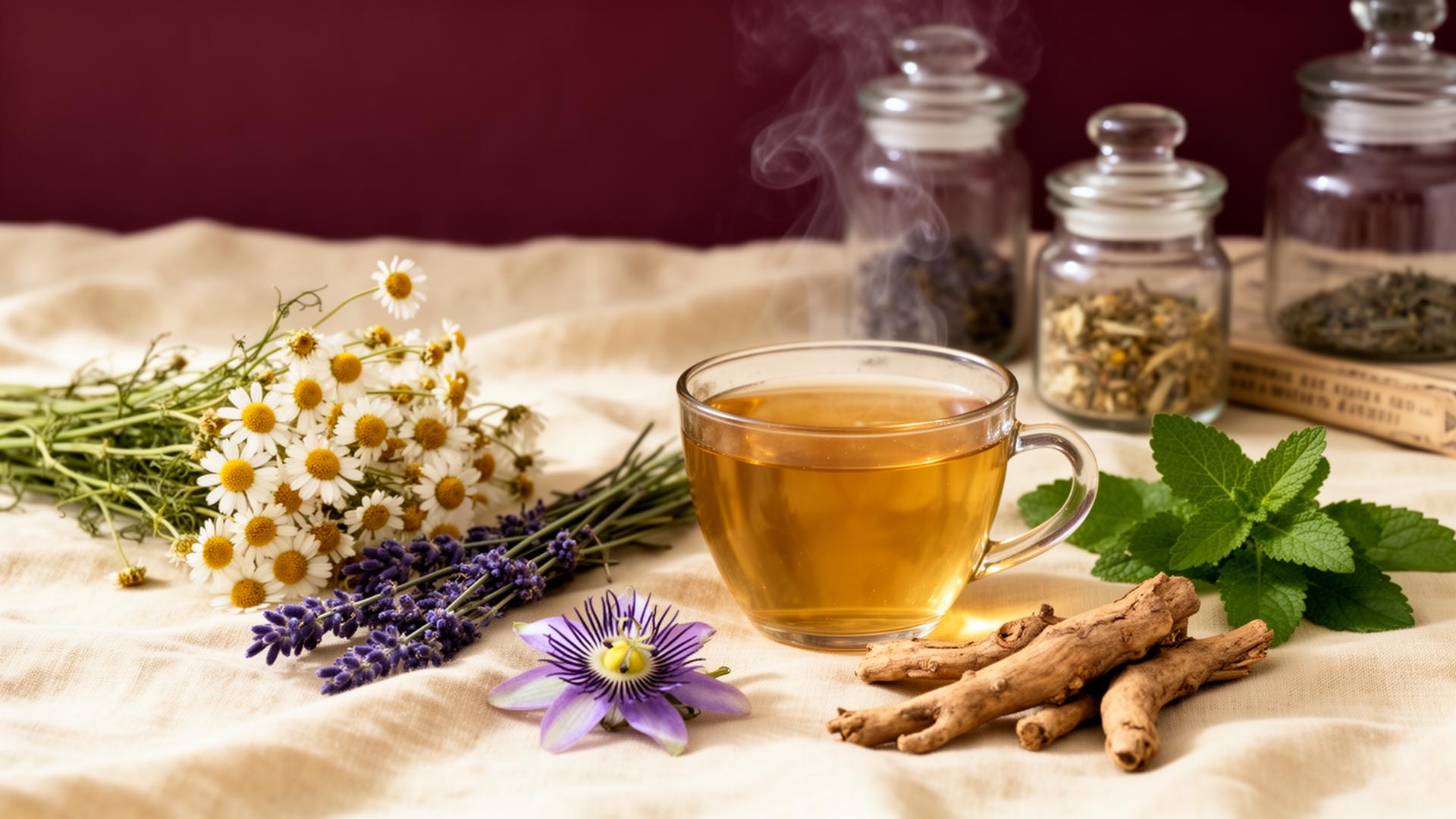
Of the herbs studied for anxiety, ashwagandha and chamomile have the strongest clinical evidence. A 2026 randomized trial rated 300 mg of ashwagandha root extract twice daily as effective and safe for reducing stress and anxiety in adults, and a 2024 systematic review of 10 studies found chamomile reduced anxiety symptoms, with 9 of 10 trials reaching a positive conclusion. This guide walks through what the evidence actually shows, the doses trials actually used, and how to build a daily routine around it.
There is a quiet revolution happening on kitchen counters and bedside tables: people are reaching for chamomile before benzodiazepines, for ashwagandha before another energy drink, for lemon balm before another scroll through bad news. Herbal remedies for anxiety are not a fringe curiosity anymore — they are mainstream, and they are backed by a surprisingly robust body of clinical research.
This guide walks through the plants worth knowing, the doses the studies actually used, what to combine, what to avoid, and how to build a daily routine that calms the nervous system without dulling it. Nothing here replaces medical care for moderate-to-severe anxiety. But for the everyday hum of stress that follows most of us into bed at night, the apothecary has a lot to offer.
What the evidence actually shows
| Herb | What the evidence shows | Typical trial dose | Source |
|---|---|---|---|
| Ashwagandha (root extract) | 300 mg twice daily rated effective and safe for reducing stress and anxiety in adults in a 2026 trial | 600 mg/day (split) | 2026 trial, PMC12973907 |
| Chamomile | A 2024 systematic review of 10 studies found chamomile reduced anxiety, with 9 of 10 trials positive | ~1,500 mg extract / day in several trials | Systematic review, PMC11109927 |
| Lavender | Listed among calming options in clinical reviews; an oral lavender oil preparation has been studied for anxiety | varies | Medical News Today review |
Trial doses are not the same as culinary use — the amounts above reflect standardised extracts used in research. If you take prescription medication or have a chronic condition, check with a clinician before starting a supplement protocol.
Why herbs work on anxiety in the first place
Anxiety is, biologically, a state of an over-active sympathetic nervous system. Cortisol stays elevated, GABA (the brain's main calming neurotransmitter) gets crowded out, and the vagus nerve — the body's brake pedal — never quite engages.
Most evidence-based calming herbs act on one of three pathways:
- GABAergic herbs that bind to or modulate GABA-A receptors the way benzodiazepines do, but more gently — chamomile, passionflower, valerian, lemon balm.
- Adaptogens that lower cortisol output and re-tune the HPA axis over weeks — ashwagandha, rhodiola, holy basil.
- Serotonergic and anti-inflammatory herbs that work upstream on mood and neuro-inflammation — saffron, lavender, turmeric.
Knowing which bucket a plant falls into tells you when to use it. GABAergic herbs are acute — they work within an hour. Adaptogens are slow — they work over four to eight weeks. The mistake most people make is taking ashwagandha during a panic attack and concluding "herbs don't work."
The nine herbs with the strongest evidence
The table below summarises the herbs with the most consistent human trial data for anxiety, including the actual doses used in those trials.
| Herb | Mechanism | Onset | Clinical dose | Best for |
|---|---|---|---|---|
| Ashwagandha (KSM-66) | Adaptogen, lowers cortisol | 4–8 weeks | 300–600 mg/day | Chronic stress, sleep |
| Chamomile (German) | GABA-A modulator | 1–2 hours | 220–1,500 mg extract or strong tea | Mild GAD, evening wind-down |
| Lavender (Silexan) | 5-HT1A & calcium channels | 2 weeks | 80–160 mg/day oral | Subsyndromal anxiety |
| Passionflower | GABA-A modulator | 30–60 min | 500 mg extract or 1 g tea | Pre-event nerves, sleep onset |
| Lemon balm | GABA transaminase inhibitor | 1 hour | 300–600 mg extract | Mild anxiety, focus |
| Valerian | GABAergic, sedating | 1 hour | 400–900 mg before bed | Sleep-related anxiety |
| Saffron | Serotonergic | 4–6 weeks | 28–30 mg/day | Anxiety with low mood |
| Rhodiola rosea | Adaptogen, fatigue-fighting | 1–4 weeks | 200–600 mg/day | Burnout, exhaustion-driven anxiety |
| Holy basil (tulsi) | Adaptogen, anti-inflammatory | 4–6 weeks | 300–600 mg extract or 2 cups tea | Daily stress resilience |
A note on quality: standardised extracts (KSM-66 ashwagandha, Silexan lavender, Sensoril, Lactium) are what most of the trials used. A capsule that says "ashwagandha 500 mg" with no standardisation is not the same product the studies tested.
Ashwagandha — the most-studied adaptogen
If you only try one herb, this is the one. Multiple randomised controlled trials, including a widely cited 2019 study in Medicine and a more recent 2026 trial that specifically rated 300 mg twice daily as effective and safe, found that 600 mg of standardised ashwagandha extract per day reduced perceived stress scores by roughly 44% and cortisol by around 23% over eight weeks. A 2021 systematic review of seven trials concluded that ashwagandha consistently outperformed placebo on standard anxiety scales.
How to use it: 300–600 mg of a standardised root extract (KSM-66 or Sensoril) once daily, ideally with food. It is not sedating, so morning works for most people. Effects build over the first month — do not judge it in week one.
Cautions: avoid during pregnancy, with thyroid medication (it can raise T4), and with strong immunosuppressants. The Mayo Clinic notes that while several herbal options show promise, more research is still needed and supplements should be discussed with a clinician, especially alongside prescription medication.
Chamomile — quietly powerful
Chamomile is the herb people underestimate because their grandmother drank it. The University of Pennsylvania ran a long-term randomised trial of 1,500 mg/day of standardised German chamomile extract in patients with generalised anxiety disorder; the chamomile group showed clinically meaningful reductions in symptoms with no more side effects than placebo. A 2024 systematic review that pooled 10 studies reached the same broad conclusion — chamomile reduced anxiety symptoms, and 9 of the 10 trials reported a positive result.
A standard tea bag delivers nowhere near a clinical dose. For a real effect, either steep two to three tea bags in a covered mug for ten minutes, or use a 400–500 mg standardised extract capsule.
Lavender (Silexan) — a clinical surprise
Silexan, a patented oral lavender oil preparation sold in Europe as Lasea, has performed comparably to low-dose lorazepam in head-to-head trials for generalised anxiety, without sedation or dependence risk. The dose is 80 mg once daily, working over two to four weeks.
For a non-pharmaceutical version, lavender essential oil diffused at night or applied (diluted) to wrists has smaller but real effects on anxiety and sleep onset.
Building a daily routine
A single herb taken occasionally rarely changes much. A simple, layered routine usually does. The structure below combines a slow-acting adaptogen with acute calming herbs at the right times.
Morning — Ashwagandha 600 mg with breakfast. Optional: a cup of tulsi (holy basil) tea instead of a second coffee.
Afternoon — Lemon balm 300 mg or a strong lemon balm tea around the 3 PM cortisol slump. This is when most people reach for sugar or caffeine; lemon balm steadies focus without the crash.
Evening — Chamomile tea (two bags, ten-minute steep, covered) thirty minutes after dinner. Pair it with a genuinely quiet activity — we make the case for reading as a daily practice as the single most under-rated wind-down ritual for an over-stimulated nervous system.
Before bed — Passionflower 500 mg or valerian 400–600 mg if sleep onset is the problem.
Run this for four to six weeks before deciding whether it is working. Keep a simple 1–10 stress score in your phone notes each evening — subjective anxiety is notoriously hard to remember accurately week to week.
What to combine, and what not to
Calming herbs stack well with each other — passionflower plus chamomile plus lemon balm is a classic European "nerve tea" blend and is gentler than any one of them at a higher dose. Ashwagandha plus rhodiola is the standard adaptogen pairing for people who are simultaneously wired and exhausted.
What does not stack safely:
- Sedating herbs with alcohol, benzodiazepines, or opioids. Valerian, kava, and high-dose chamomile potentiate central nervous system depression.
- St John's wort with SSRIs or SNRIs. Risk of serotonin syndrome. St John's wort also accelerates the metabolism of many medications, including hormonal birth control.
- Ashwagandha with thyroid hormone replacement unless your doctor is monitoring TSH.
- Kava long-term. Effective for acute anxiety but carries a real, if rare, hepatotoxicity risk; not recommended for daily use.
Diet matters more than people think
Herbal remedies for anxiety work best when the nervous system is not being actively inflamed by what you eat the rest of the day. Blood sugar swings, ultra-processed food, and chronic low-grade inflammation all amplify the cortisol baseline that adaptogens are trying to lower.
The simplest dietary intervention with the most evidence is an anti-inflammatory eating pattern — emphasising leafy greens, oily fish, olive oil, berries, nuts, and herbs, and minimising refined carbohydrate and seed oils. People who pair adaptogenic herbs with this kind of eating pattern report noticeably better results than people who take the herbs alone. We covered the underlying science and a starter set of recipes in Anti-Inflammatory Diet Cookbook for Beginners — see the book in the catalog for a structured way in.
How long until it works?
Different herbs, different timelines. The chart below is approximate but lines up with most of the published trials.
| Week | Acute herbs (chamomile, passionflower, lemon balm) | Adaptogens (ashwagandha, rhodiola, holy basil) | Silexan lavender / saffron |
|---|---|---|---|
| 1 | Noticeable wind-down within an hour of dose | Subtle baseline shift, often missed | Mild improvement in some |
| 2 | Same | Sleep often improves first | Anxiety scores start to drop |
| 4 | Same | Clear reduction in stress reactivity | Comparable to low-dose anxiolytics in trials |
| 8 | Same | Maximum effect; cortisol meaningfully lower | Plateau |
If you have run a full eight-week protocol with a standardised adaptogen and an acute herb stack and seen no change, the issue is probably not your herb cabinet — it is worth seeing a clinician about underlying anxiety, sleep apnea, thyroid, or iron.
When herbs are not the right tool
Herbs are excellent for sub-clinical anxiety, daily stress, and as adjuncts. They are not the right primary treatment for:
- Panic disorder with frequent attacks
- Severe generalised anxiety disorder
- Anxiety with active suicidal ideation
- PTSD requiring trauma-focused therapy
- Anxiety caused by an underlying medical condition (hyperthyroidism, arrhythmia, perimenopause without other support)
In those cases, the herbs may still help around the edges, but the centre of treatment belongs to a clinician.
Going deeper — the apothecary tradition
Most of what is written above is the modern, clinical face of a much older tradition. Western herbalism, Ayurveda, and traditional Chinese medicine all built sophisticated systems for working with the nervous system long before anyone measured cortisol. If you want the longer view — how to identify, harvest, dry, blend, and dose your own herbs rather than buying capsules — Herbal Wisdom: The Complete Apothecary and Herbal Medicine Book is the practical, beginner-friendly reference we recommend. It covers anxiety, sleep, immunity, digestion, and women's health, with monographs for over a hundred plants.
Frequently asked questions
What is the best herbal remedy for anxiety? For most people with everyday stress, the strongest single-herb evidence is for standardised ashwagandha (KSM-66, 600 mg/day) used for at least four weeks, combined with chamomile tea or extract in the evening. For acute nerves before a specific event, passionflower 500 mg one hour beforehand has the fastest reliable effect.
Do herbal remedies for anxiety actually work, or is it placebo? Several — ashwagandha, Silexan lavender, chamomile, saffron, and passionflower — have outperformed placebo in randomised controlled trials. The effect sizes are smaller than prescription anxiolytics for severe cases, but comparable for mild-to-moderate anxiety, and the side-effect profile is far gentler.
How long does it take for herbs to calm anxiety? Acute GABAergic herbs (chamomile, passionflower, lemon balm) work within thirty to sixty minutes of a real clinical dose. Adaptogens (ashwagandha, rhodiola, holy basil) need four to eight weeks of daily use before the full effect shows up.
Can I take herbal remedies with anxiety medication? Some combinations are fine, others are dangerous. Never combine St John's wort with an SSRI or SNRI. Be cautious stacking sedating herbs (valerian, kava, high-dose chamomile) with benzodiazepines or sleep medication. Always tell your prescriber what you are taking — most are happy to work around it, but they need to know.
Is chamomile tea strong enough on its own? A single tea bag, no. Two to three bags steeped covered for ten minutes, or a 400–500 mg standardised extract, gets closer to the doses used in trials. The cover matters — chamomile's active oils evaporate if the cup is open.
Are herbal remedies safe during pregnancy? Many calming herbs — including ashwagandha, valerian, kava, and St John's wort — are not recommended in pregnancy. Chamomile and lemon balm in normal culinary amounts are generally considered safe, but anything in extract or therapeutic-dose form should be cleared with an obstetrician first.
This article is informational and does not constitute medical advice. If you are managing a diagnosed anxiety disorder, are pregnant or breastfeeding, or take prescription medication, discuss any herbal supplement with a qualified clinician before starting.
Anxiety is rarely solved by a single intervention. But a well-chosen herb cabinet, an anti-inflammatory plate, decent sleep, and the willingness to actually run a protocol for two months instead of two days will move the needle for most people — quietly, sustainably, and without trading one problem for another.
The same herb families that show up in the apothecary tradition also carry the kitchen end of the anti-inflammatory pattern — our summer foods guide walks through that connection.
Browse more on slow living, food as medicine, and the apothecary tradition in our full catalog or more posts on the blog.