The craft of the cookbook
How a recipe collection becomes a book that lasts — testing, headnotes, photography, and the long conversation between a cookbook and its kitchen.
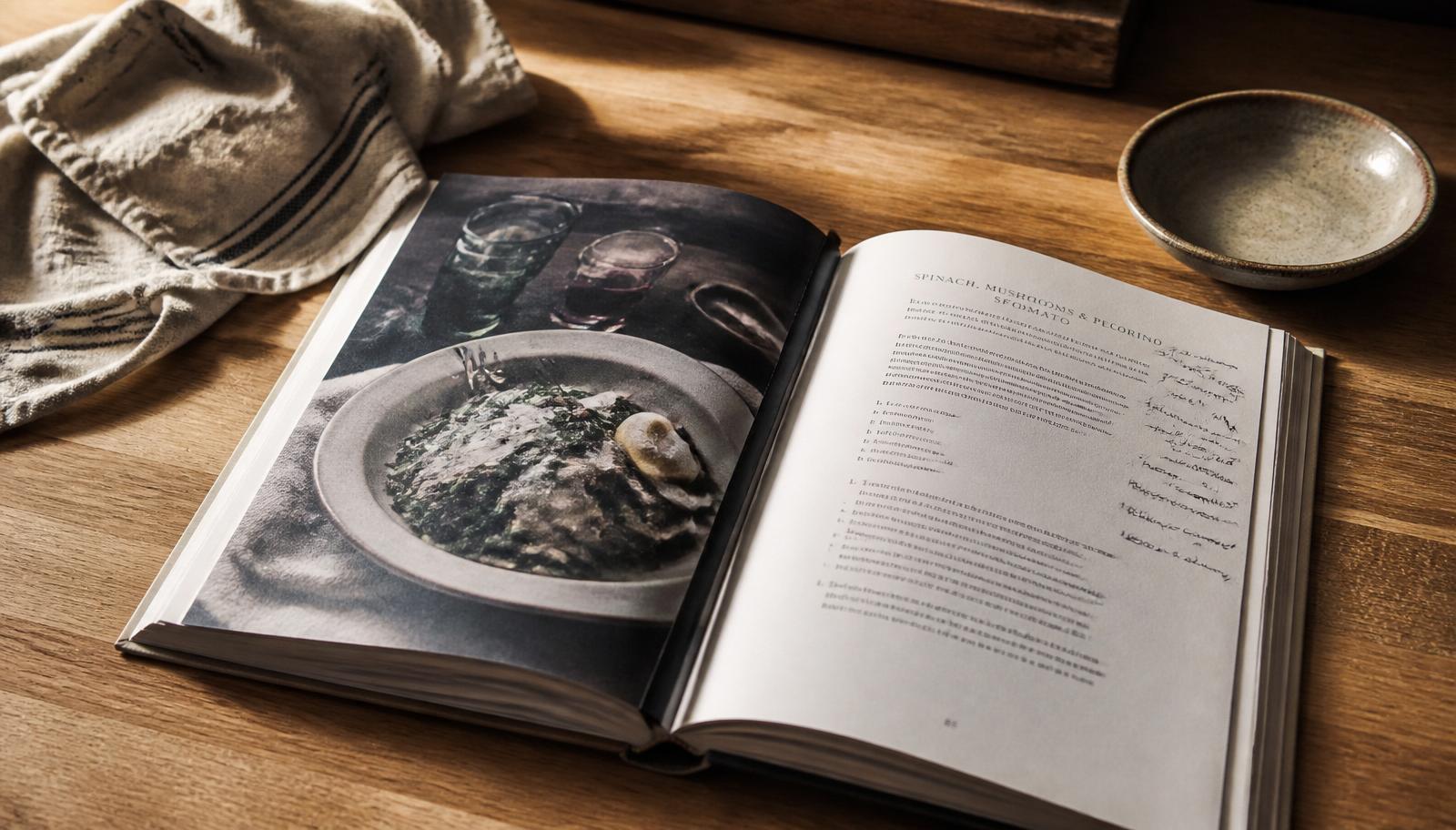
The short version. Every recipe in an Itorzo cookbook is tested at least three times before it reaches a reader — once by the author, once by an editor who has never made it, and once by a cook in a different kitchen with a different oven. A cookbook is the only publishing form that survives being splattered for a decade; the rest of this post is what we look for before we sign one.
A cookbook is a strange object. Half-instruction, half-memoir, it has to teach a stranger how to cook while also convincing them the result is worth the effort. The recipes are the easy part. The hard part is everything around them — the headnotes, the order of chapters, the photograph that decides whether a reader trusts you by page twelve.
When we sit down with a new author at Itorzo, the first conversation is rarely about recipes. We ask: who is the person at the kitchen counter holding this book? Are they a brand-new cook who has never browned an onion, or a confident home chef looking for a single weeknight idea? The answer shapes everything — vocabulary, ingredient lists, the assumed equipment, the length of a method, even the photography brief.
It's the same question we ask ourselves when we shape our cookbook list as a whole: who is this for, and what does it owe them?
Recipes are tested three times, then once more
Every recipe in an Itorzo cookbook is tested at least three times. The first pass is the author's own; the second is by an editor who has never made it before, working only from the written words; the third is a "translation" pass where we hand it to a cook in a different city, with a different oven, different flour, and different patience for instructions.
If a recipe survives all three, we test it one more time — usually under deliberately bad conditions. A distracted parent. A small kitchen. A measuring cup that has gone missing.
This sounds excessive. It is not. The single fastest way to lose a reader is a recipe that fails the first time they try it. They will not blame themselves; they will blame the book, and quietly stop opening it.
| Pass | Who tests it | What it catches |
|---|---|---|
| Pass 1 — Author | The recipe's creator | Confirms the dish works as intended |
| Pass 2 — Blind edit | An editor who has never made it, working only from the written words | Catches unclear instructions and missing steps |
| Pass 3 — Translation | A cook in a different city, different oven, different flour | Catches assumptions about equipment and ingredients |
| Pass 4 — Stress test | Under deliberately bad conditions (distracted, small kitchen, missing tools) | Catches fragility — what breaks under real-world use |
The headnote does the heavy lifting
A good headnote is not throat-clearing. It is the part of the recipe that earns the reader's trust before they commit forty minutes of their evening. The best headnotes do three things in under a hundred words: they tell you why this dish exists, what to expect at the end, and one specific thing that will go wrong if you skip a step.
We coach authors to write headnotes last, after the recipe has been tested into its final shape. By then the author knows where readers stumble, and the headnote can warn them before they fall. The shape of a great cookbook can be set in its headnotes alone — see how Most Wanted Italian Recipes leans on a short story before each plate, or how a single-sentence warning about salt in Most Wanted Zucchini Recipes saves a cook from a watery pan.
Cookbook formats we publish
A reader picks a cookbook for the promise it makes. Some promise depth — fifty ways with one thing. Some promise range — one book for the whole kitchen. Some promise an outcome — a health goal, a faster weeknight, a new tool mastered. We don't publish every format; we publish the ones we can keep that promise for.
| Format | Reader promise | Itorzo example |
|---|---|---|
| Single-subject — one ingredient or one cuisine | Depth over breadth; fifty ways with one thing | Most Wanted Italian Recipes, Most Wanted Zucchini Recipes |
| Multi-cuisine, every day | One book on the counter for the whole kitchen | Most Wanted Breakfast Recipes |
| Dietary pattern — keto, Mediterranean, anti-inflammatory | A health outcome supported by an eating plan | Super Easy Keto Cookbook for Beginners, Mediterranean Diet Air Fryer Cookbook for Beginners, Anti-Inflammatory Diet Cookbook for Beginners |
Each format gets its own testing pipeline. A breakfast book gets tested at 6:30 a.m. on a weekday. A keto book gets tested by someone who has never counted a macro in their life. A zucchini book, predictably, gets tested in late July.
Photography that respects the food
Cookbook photography has drifted toward two extremes — the over-styled magazine shot with tweezers and forty props, and the deliberately rough "real life" shot that looks like it was taken on a phone in poor light. Neither is honest. The first promises a result no home cook will reach; the second undersells food that took real care to make.
Our house style sits in the middle. Natural light when possible. Plates the reader could plausibly own. Steam if the dish has steam. Crumbs if the dish has crumbs. The goal is recognition, not aspiration — the reader should look at the photo and think yes, that is what mine will look like, and then be right.
It's the same discipline that shaped Most Wanted Italian Recipes — every plate on the page is one a reader can actually put on their own table.
The book as a long conversation
A cookbook lives in a kitchen for years. It gets splattered, dog-eared, lent to a sister, returned with a new favorite page. That long, physical life is the reason we still believe in the form, even as recipes scatter across apps and videos and screenshots.
A well-made cookbook is a quiet, patient teacher. It does not interrupt. It does not autoplay the next thing. It waits on the counter for the cook to come back, hands washed, ready for the next step.
Our job, as publishers, is to make sure that when the cook does come back, the book is still telling the truth. If you want to see that promise tested in the wild — kids, lunchboxes, ten minutes before the bus — our Healthy Back-to-School Lunchbox Ideas guide applies the same rules to a single lunchbox.
The form is older than any of us. Mrs. Beeton's Book of Household Management, first published in 1861, still reads like a working manual — proof that a cookbook written with care can outlast every platform that comes after it (Project Gutenberg).