What to Do With Too Many Tomatoes: A Summer Cook's Guide
When the garden gives you more tomatoes than sandwiches can hold, here's how to turn a summer glut into sauce, salads, and slow dinners worth the season.
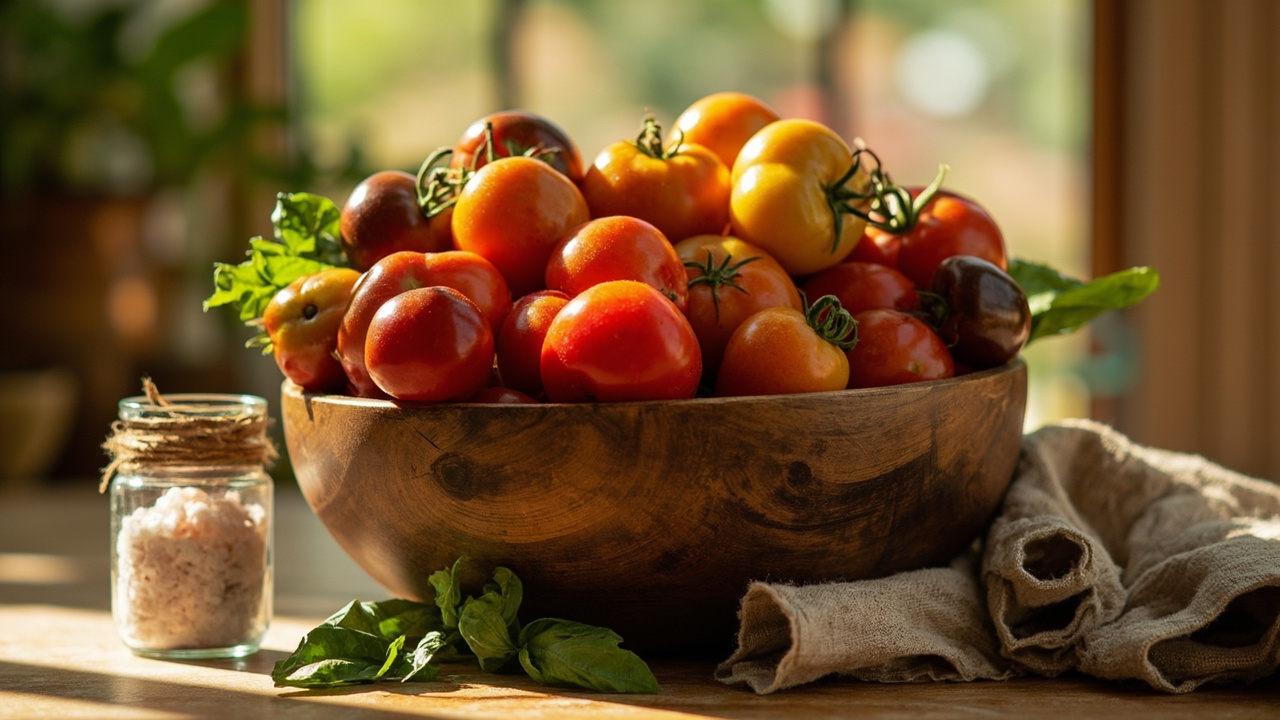
A heavy tomato harvest is one of the better problems a kitchen can have. When the vines start coming in faster than sandwiches can carry them, the question is not whether you have too many — you do — but which of the day's haul you should cook down, slice raw, or let ripen another day on the counter. This guide is for the cook who has just been handed a colander of ripe tomatoes and needs a plan before lunch.
Peak summer tomatoes do not behave like the hothouse variety you buy in January. They are sweeter, thinner-skinned, more aromatic, and far more perishable once picked — which is why the recipes below assume you want to use them quickly, not store them for weeks. We will cover how to triage a glut, which varieties to cook and which to slice raw, the four sauces worth making in a single afternoon, and the slow dinners that let a ripe tomato speak for itself.
If you cook your way through this in late July or early August, you will end the week with a freezer full of sauce, a couple of jars on the counter, and very few tomatoes left on the counter. That is the right outcome.
Triage first, recipe second
Before you reach for a knife, sort the harvest into three piles. This takes two minutes and decides what everything else in the week looks like.
| Pile | Condition | What to do with it |
|---|---|---|
| Eat today | Fully colored, slight give when pressed, fragrant at the stem | Slice raw; caprese; tomato salad; toast topping |
| Cook tomorrow | Colored but firm, no fragrance yet, slightly under-ripe | Counter-ripen 24–48 hours; sauce; braise; roast |
| Cook today | Heavy, soft, splitting, very fragrant, or bruised | Sauce; jam; roasted tomato paste; freeze whole |
The mistake most home cooks make is putting the entire harvest into the fridge. Cold stops the aromatic compounds that make a ripe tomato taste like a ripe tomato. If you must refrigerate, only do so for fully ripe fruit you will eat within 48 hours, and bring back to room temperature before serving.
The four sauces worth making in one afternoon
When a glut arrives, the fastest way to get ahead of it is to commit a Saturday to sauce. You will use the ripest, softest fruit — the ones that will not survive another day on the counter — and you will end up with the base for an entire month of weeknight dinners.
-
A simple Sunday sauce. Roughly 4 kg of ripe tomatoes, blanched, peeled, seeded, and simmered for 90 minutes with a halved onion, six garlic cloves, a small bunch of basil, salt, and a glug of good olive oil. Pass through a food mill if you want it smooth; leave it as is for a more rustic sauce. Freezes in 500 ml portions for three months.
-
Roasted tomato passata. Halve 2 kg of ripe tomatoes, toss with olive oil, salt, garlic, and a few thyme sprigs, and roast at 200 °C / 400 °F for 45 minutes until the edges blacken. Pass through a sieve. The concentration of flavor is unusual — somewhere between fresh tomato and sun-dried — and it is the secret behind any pasta you serve to someone who claims not to like tomato sauce.
-
A fresh raw sauce for the week. One kg of the very best ripe tomatoes, peeled and seeded, chopped fine, mixed with a minced garlic clove, a handful of torn basil, a quarter cup of olive oil, salt, and a spoon of red-wine vinegar. Keeps four days in the fridge and is what you put on everything from grilled bread to cold chicken.
-
A quick green-tomato chutney. Use the firmest, least-ripe fruit from the second pile. One kg of green tomatoes, one large onion, 150 g of brown sugar, the juice of two lemons, a thumb of grated ginger, and a teaspoon of mustard seed. Simmer for an hour, jar, and refrigerate. It is the right answer for everything grilled in late August.
If you would rather not start from scratch, our Most Wanted Tomato Recipes collection goes deeper on sauces, soups, and the slow-cooked Italian dishes that use up a glut — and it has the test-kitchen notes on which variety behaves best in each application.
Slow dinners that let the tomato lead
When the harvest is at its peak, the best dinners are the ones where the tomato is allowed to be the loudest flavor in the room. These three are what we cook most in late July.
Pasta al pomodoro, done properly. 400 g of the best tomatoes you can find, blanched and roughly crushed by hand. A small handful of whole garlic cloves, gently warmed in olive oil until fragrant and then removed. The tomatoes go in, simmer for twenty minutes, season with salt and a single basil leaf, and toss with 400 g of cooked spaghetti and a hard grating of pecorino. The whole dish is ten minutes of attention and a lifetime of getting it right. The Italian cook in Most Wanted Italian Recipes treats this as the test of whether a cook actually understands how to feed people — and she is right.
Tomato and bread salad, the kind that gets better as it sits. Roughly torn stale country bread, a few cloves of crushed garlic, a kilo of ripe tomatoes squeezed into rough chunks, a small red onion sliced thin, a fistful of basil, a generous pour of olive oil, salt, and a long rest — at least twenty minutes on the counter, ideally an hour. This is what gets made in Italian kitchens the day after a sauce is put up, because no one wants to waste a single tomato.
Roasted tomatoes on toast, the breakfast that explains why tomatoes exist. Halve a kilo of ripe tomatoes, place cut-side up on a sheet pan with olive oil, salt, a little sugar, a few sprigs of thyme, and slow-roast at 160 °C / 320 °F for an hour. Spoon onto toasted sourdough with a swipe of ricotta or butter. Eat with coffee. Repeat for the rest of the week.
Storing what you cannot eat fresh
Even with the most aggressive cooking day, you will usually end up with a few kilos you cannot get through before they spoil. Three options, in order of how much we recommend each.
| Method | Best for | How long it keeps |
|---|---|---|
| Freeze whole | Sauces, soups, stews — anything that will be cooked again | 6 months at peak quality; safe indefinitely |
| Can as sauce | Pasta, beans, braised dishes | 12+ months in sealed jars |
| Sun-dry | Garnish, salads, winter pasta | 6 months in oil in the fridge; 12 months dried |
Freezing whole is the lowest-effort, highest-payoff option. Wash and dry the tomatoes, spread them on a sheet pan in a single layer, freeze until solid, then transfer to a freezer bag. They collapse when thawed and are exactly what you want to drop into a pot of soup in February. Do not bother peeling or seeding first.
If you have the patience and equipment to can, do — a dozen jars of properly sealed sauce is a kind of August-in-a-jar. If you live somewhere dry and hot in late August, sun-drying in a single layer on a rack covered with cheesecloth is worth the four days it takes.
A note on variety
Not all tomatoes behave the same way in the kitchen. The small, dense paste varieties (Roma, San Marzano, Amish Paste) cook down into sauce faster and with less water to boil off. The large, watery slicers (Beefsteak, Brandywine, Black Krim) are best raw or roasted. The cherries and grape tomatoes are nearly all sugar and almost impossible to overcook — they are what you want for slow-roasting whole or for a quick pan sauce with pasta.
If your glut comes from a CSA or farmers' market and the variety is not labeled, ask. The grower will know, and it will change what you cook first.
A summer glut is a privilege
It is easy, in the middle of a glut, to feel slightly overwhelmed. There are only so many caprese salads one kitchen can absorb. But a heavy tomato harvest is one of the better things that can happen to a cook in any given year — it is the one moment when the ingredient is so good that almost anything you do with it will turn out well. A few afternoons of cooking now, and you will be pulling jars and freezer bags out of storage for the rest of the year.
If you want to go further — into the drying, the canning, the regional sauces — the tomato chapter in our Most Wanted Tomato Recipes collection is the place. We tested each recipe across three harvests before we were willing to put it in print. It is the book we wish we had the summer we first planted too many vines.
If you're interested in the broader pattern of how summer foods — including tomatoes — fit into an evidence-aware anti-inflammatory plate, see our guide to summer foods that quiet inflammation.